







Why Your iPhone Gets Hot – and Why Apple Finally Fixed It
Your iPhone 16 Pro felt warm after 20 minutes of gaming. Your benchmarks looked great at the start, then dropped off.
You knew the A-series chip was capable – it just couldn’t breathe. Apple heard every complaint.
The iPhone 17 Pro vapor chamber is the answer, and it’s the single most important internal upgrade in years.
Here’s everything you need to know, explained simply and honestly.
Short Info on iPhone 17 Pro vapor chamber
What Is the iPhone 17 Pro Vapor Chamber?

Before the iPhone 17 Pro,
Apple managed heat inside iPhones using graphite sheets — thin layers of carbon material that spread heat passively across the phone’s interior.
They work, but they have limits. Under heavy load, they saturate quickly and can’t move heat fast enough.
A vapor chamber is a fundamentally different technology.



🔬 Expert Insight
IEEE Spectrum — one of the world’s leading engineering publications — covered the iPhone 17 Pro vapor chamber in its November 2025 print issue, titling the piece “Apple Phones Join the Vapor-Cooling Trend.” This is not a marketing gimmick. Vapor chamber cooling has been validated by engineers and physicists for decades. Smartphones like Samsung’s Galaxy S series have used versions of this tech for years. Apple’s entry into this space is notable because of how they implemented it — not just that they implemented it.
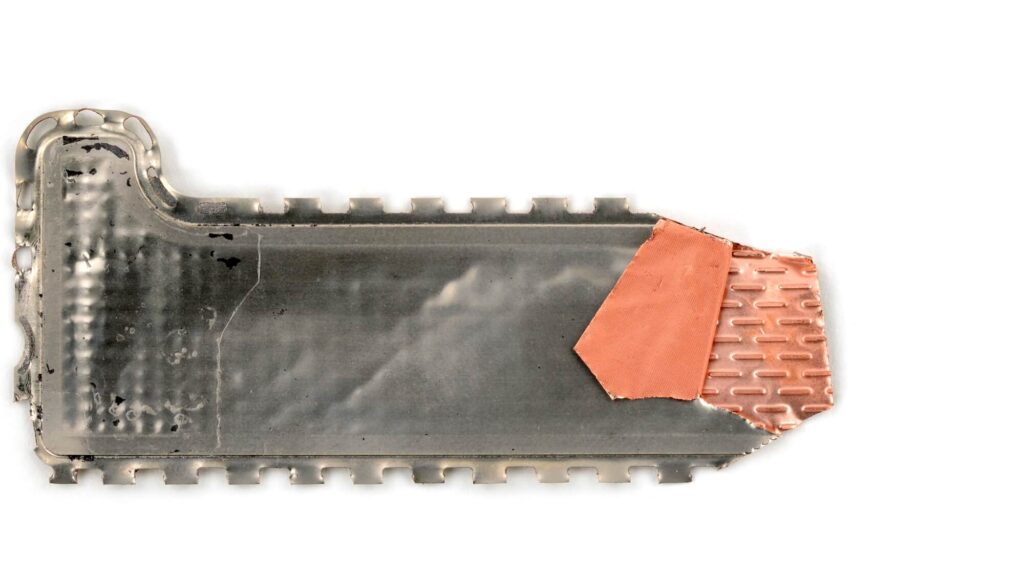
The iPhone 17 Pro’s cooling system uses an Apple-designed, laser-welded vapor chamber built directly into the device’s aluminum unibody chassis.
Here’s what that means in plain terms:
This is thermodynamics working for you, on a microscopic scale, inside a 6.3-inch phone.
The Analogy That Makes Vapor Cooling Click
Think of your old iPhone’s graphite sheet like a sponge. Drop some water on a table and press a sponge to it — the sponge picks up the water and holds it. That’s a graphite sheet absorbing heat. It works until it’s saturated. Then it stops.
Now think of the vapor chamber like a radiator in a car. The coolant absorbs engine heat, moves it away, releases it through the radiator fins, and loops back for more — endlessly, efficiently.
It doesn’t saturate because the heat is continuously carried away rather than just absorbed. The iPhone 17 Pro vapor chamber is your phone’s radiator.
The A19 Pro chip is the engine. Together, they can run hard, for longer, without getting hot enough to slow down.
How Apple’s Laser-Welded Vapor Chamber Actually Works: Step-by-Step
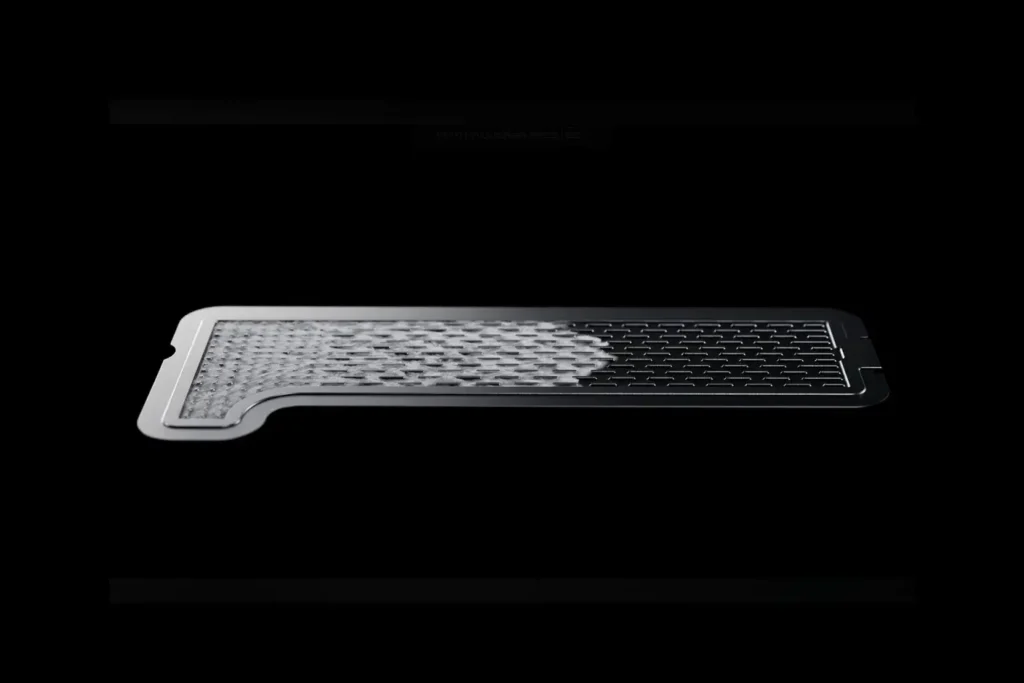
Apple’s SVP of Worldwide Marketing, Greg Joswiak, described it publicly at Apple’s September 2025 event. Here’s a simplified breakdown:
The laser-welding step is critical. It creates a hermetically sealed environment — no leaks, no oxidation, no degradation over years of use. Apple didn’t just slap a vapor chamber inside the phone. They engineered it as a structural component of the device itself.
Performance: What Do the Numbers Actually Say?
Numbers tell one story. Real users tell another. Here’s both.
The Official Claim
Apple states that the A19 Pro paired with the vapor chamber delivers up to 40% better sustained performance than the iPhone 16 Pro, ideal for gaming, video editing, and running large local AI models.
What Third-Party Testing Shows
TechRadar found the iPhone 17 Pro to be the fastest smartphone in both single- and multi-core CPU performance, beating the Samsung Galaxy S25 Ultra — though the S25 Ultra sometimes edged ahead in GPU-specific benchmarks.
Notebookcheck covered AI developer Argmax’s stress tests: Argmax reported that, in addition to massive AI performance gains, the vapor chamber does an exceptional job keeping the device cool under extreme on-device AI loads.
A real-world gaming test published by Notebookcheck found the iPhone 17 Pro Max running Resident Evil 4 at a locked 60 FPS without any thermal throttling — a benchmark that previous iPhone Pro models couldn’t sustain.
The IGN Verdict
IGN’s Jacqueline Thomas described the iPhone 17 Pro Max’s aluminum chassis and vapor chamber as keeping the phone “relatively cool,” calling it “a compelling gaming phone — even if it’s not the fastest one out there.”
Short Story: The Gamer Who Finally Stopped Rage-Quitting
Marcus, a 28-year-old mobile gamer in Austin, Texas, had a pattern with his iPhone 16 Pro. He’d start a ranked match in Genshin Impact, play for about 30 minutes, then feel the phone get uncomfortably warm in his hand. Frame rates would drop. He’d lose a match because the phone throttled at the worst moment.
He upgraded to the iPhone 17 Pro in September 2025. Three months later, he’s still waiting for the throttle. It hasn’t come. He plays hour-long sessions and the phone stays warm — not hot. Frame rates stay consistent. His ranked score is the highest it’s ever been. He credits the phone. His opponents probably do too.
iPhone 17 Pro Vapor Chamber vs. iPhone 16 Pro: Head-to-Head
| Feature | iPhone 16 Pro | iPhone 17 Pro |
|---|---|---|
| Cooling Method | Graphite heat spreader | Apple vapor chamber |
| Chip | A18 Pro | A19 Pro |
| Sustained Performance Gain | Baseline | Up to 40% better |
| Chassis Material | Titanium | Aluminum unibody |
| Thermal Throttling | Noticeable under load | Significantly reduced |
| AI Workload Handling | Moderate | Excellent |
The aluminum unibody deserves a separate mention.
Apple’s switch from titanium to aluminum actually improves thermal performance, because aluminum conducts heat far better than titanium — the entire chassis becomes part of the cooling solution.
Is the Vapor Chamber Actually Future-Proof?
This is the question that matters most right now, in 2026.
As AI workloads on iPhones increase — with Siri’s advanced Apple Intelligence upgrades expected to roll out further through 2026 — the vapor chamber positions the iPhone 17 Pro as the model best equipped to handle on-device AI demands without thermal slowdowns.
Apple Intelligence already runs local AI models on-device. Those models are only getting larger and more demanding. An iPhone that can sustain peak CPU and Neural Engine performance under that heat is not just a better phone today — it’s a significantly more capable phone 18 months from now. iPhones without vapor chamber cooling will start showing their limits as iOS relies more heavily on local AI processing.
iPhones with a vapor chamber will likely demonstrate increased performance advantages compared to models without the technology as AI demands grow more intense.
💡 Pro Tip
If you use your iPhone for AAA mobile gaming, 4K video editing in Final Cut or LumaFusion, or you run Apple Intelligence features heavily — the vapor chamber isn’t a “nice to have.” It’s a core performance feature. Budget-tier or standard iPhone models in the iPhone 17 lineup do not include vapor chamber cooling. It is exclusive to the Pro and Pro Max.
What About iPhone 17 vs. iPhone 17 Pro Vapor Chamber?
Let’s be direct: the standard iPhone 17 and iPhone 17 Air do not have a vapor chamber. This is a Pro-exclusive feature for 2025-2026.
The key differences between the standard iPhone 17 and iPhone 17 Pro include the faster A19 Pro chip, a dedicated Fusion Telephoto camera, and the vapor chamber cooling system — none of which are present on the base model.
If sustained performance under load matters to you, the Pro tier is the only tier to consider.
Troubleshooting: What If Your iPhone 17 Pro Still Gets Warm?
The vapor chamber dramatically reduces throttling. It doesn’t eliminate heat entirely — and it shouldn’t. Heat transfer is the goal of the system. Here’s what to do if your device feels unexpectedly warm:
Scenario 1: Phone Gets Warm During Gaming
This is normal and expected. The vapor chamber is moving heat from the chip to the aluminum chassis. That slight warmth you feel on the back? That’s the system working correctly. It should not feel painfully hot. If it does, remove the case — thick cases trap heat.
Scenario 2: Performance Drops Even with Vapor Chamber
Scenario 3: Phone Gets Hot While Charging and Running Apps
Charging generates its own heat. Running demanding apps simultaneously stacks thermal load. Use the phone lightly while charging, or enable Optimized Charging to reduce charging speed and heat.
Scenario 4: Unusual Heat in Everyday Use
If your iPhone 17 Pro gets uncomfortably hot during basic tasks like texting or web browsing, this is abnormal. Restart the device. If it persists, contact Apple Support — vapor chamber issues causing abnormal heating are covered under warranty.
FAQ: iPhone 17 Pro Vapor Chamber
A: No. The chamber is laser-welded shut and hermetically sealed. There is no path for the deionized water to escape under any normal operating conditions. Apple engineered this to last the life of the device.
A: Indirectly, yes. When a chip runs hot, it draws more power and forces the system to throttle. By keeping the A19 Pro at optimal temperatures, the vapor chamber lets the chip operate more efficiently — which reduces unnecessary power draw over extended sessions.
A: Similar concept, different execution. Android flagship phones from Samsung and others have used vapor chambers for several years. Apple’s implementation is notable for being laser-welded directly into the structural chassis and designed to work with the aluminum unibody as a unified thermal system — rather than as an isolated internal component.
A: The chamber is a rigid, sealed metal structure inside the device. It’s not fragile like a water pipe. Normal drops protected by a case are extremely unlikely to damage it. A severe, unprotected impact that damages the chassis could theoretically affect it, but that level of damage would affect many other components first.
A: Apple has not announced any plans to bring vapor chamber cooling to non-Pro iPhone models. Based on historical patterns, this technology typically trickles down to the standard lineup over 2-3 product generations, but there is no confirmed timeline as of April 2026.
Ready to upgrade? The iPhone 17 Pro is available directly from Apple in 256GB, 512GB, and 1TB storage options, starting at $999. If sustained performance, AI workloads, and serious gaming are part of your daily routine — the vapor chamber alone makes the Pro tier worth every dollar.

T’kal is the lead strategist and developer behind Apple Headlines. With a background in digital marketing and web development, he specializes in technical Apple troubleshooting, software news, and hardware rumors. T’kal focuses on delivering high-authority tech content that bridges the gap between Apple enthusiasts and the latest industry innovations.